

First appeared in swissinfo.ch on 31st October 2025
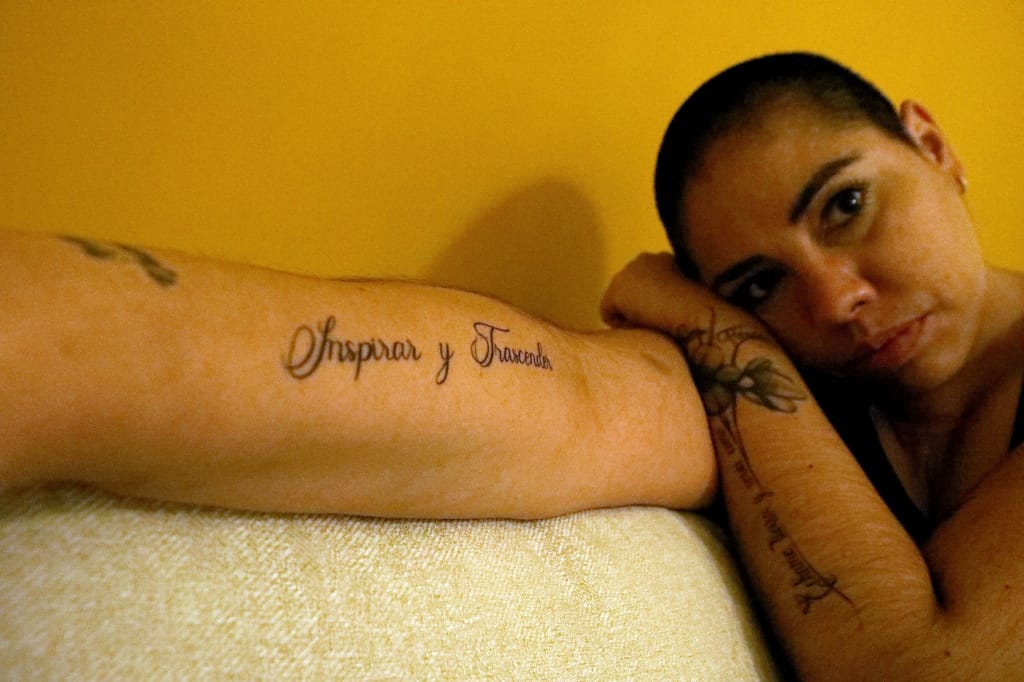
With a penetrating gaze and a flirtatious smile, Samara Martinez, a 30-year-old Mexican terminal patient, poses a question to her nearly 400,000 followers on TikTok: “Why, instead of seeking euthanasia, don’t I just disconnect from my machine and be done with it?”
Then, without losing energy or charm, she explains that she suffers from several serious illnesses and spends 10 hours a day connected to a dialysis machine to survive.
For this reason, she is leading a campaign in Mexico that seeks to make euthanasia a right.
“Because I don’t want to suffer and I want to die with dignity,” he answers the initial question, as he moves closer to the camera until he is in the foreground.
The apparent paradox of Samara’s campaign is the enthusiasm and creativity with which she carries it out, primarily on her social media. “It helps me ‘stay alive,'” she tells AFP at her home in Chihuahua, in northern Mexico.
“Social media can also be used to change the world,” adds this journalist, who considers herself “an agent of change” rather than an “influencer.”
Originally, his social media accounts were a chronicle of his life with multiple chronic-degenerative diseases and severe kidney failure.
After two failed kidney transplants and with no options for a cure, in August he launched his crusade for dignified death.
“I am going to be the person who legalizes euthanasia in Mexico,” she says confidently because, unlike previous initiatives, hers is the first led by a patient.
In Latin America, Uruguay became the first country to decriminalize euthanasia by law two weeks ago. Ecuador and Colombia legalized it years ago through court rulings.
– Out of love and respect –
Making the decision was a profound dilemma for Samara, after more than a decade of fighting to get better. She spoke with her parents. “We’re with you,” they replied.
“It’s for me, and it’s because of the respect I have for my body and how much I love myself. That’s also where this cause comes from,” she says.
Stoic and with an unquenchable good humor, which baffles the millions who watch her videos, Samara explains her decision.
“It’s not that I gave up, I’ve simply unlocked that part of myself that understands that death is not the enemy, that it is not pain. That death is a sister, a friend, and something to be embraced,” she adds.
From her office as a professor at a university in Chihuahua, where she works from Monday to Saturday, Samara analyzes her options.
“No one can force me” to continue dialysis, he says calmly. “It would take me 15 days to die, but those 15 days are agony, suffering, because your whole body becomes poisoned, you can drown in your own fluid, it’s a very undignified death,” he points out.
He explains that doing so would be a form of passive euthanasia, that is, the omission or suppression of all treatment that keeps a terminally ill patient alive.
One variant is the Advance Directives Law, a procedure in force in Mexico by which any person in use of their faculties can request that their life not be artificially prolonged and that they be provided only with palliative care.
But Samara dismisses this option, arguing that in Mexico a pet can “transcend with dignity,” free from unnecessary pain, while people are forced to suffer.
– To transcend –
Under the name Ley Trasciende (Transcend Law), next week he will personally present an initiative to the Senate that proposes a comprehensive euthanasia procedure guaranteed by the State.
The proposal aims to recognize the right to decide the end of life; guarantee a death without unnecessary suffering; provide medical and human support to patients and their families; and decriminalize compassionate killing.
“It’s time we stopped criminalizing compassion,” she emphasizes.
With more than 118,000 signatures supporting her petition, Samara is now fighting to gain votes in the Senate dominated by Morena, the leftist party of President Claudia Sheinbaum.
“I have seen fellow activists die connected to that hemodialysis machine. We are going to achieve it, because it is necessary and dignified to put the autonomy of any person” above other arguments, he affirms.
If approved, Samara wishes to continue working, for as long as her body allows, to “materialize” the law.
When the time comes, she envisions what a “perfect death” would be like: “I always talk about the sea, about that day at sunset. About a celebration of life with my family, surrounded by the people I love and who love me, and being able to leave peacefully, without pain.”
You can follow Samara’s story on her Instagram Page HERE